Why the Scale Lies: What Body Fat Percentage Actually Tells You
Why the Scale Lies: What Body Fat Percentage Actually Tells You
Most people judge their health and fitness using one number:
Body weight.
Every morning, millions step on the scale hoping to see progress. If the number goes down, they feel successful. If it goes up, they feel defeated.
But here’s the problem:
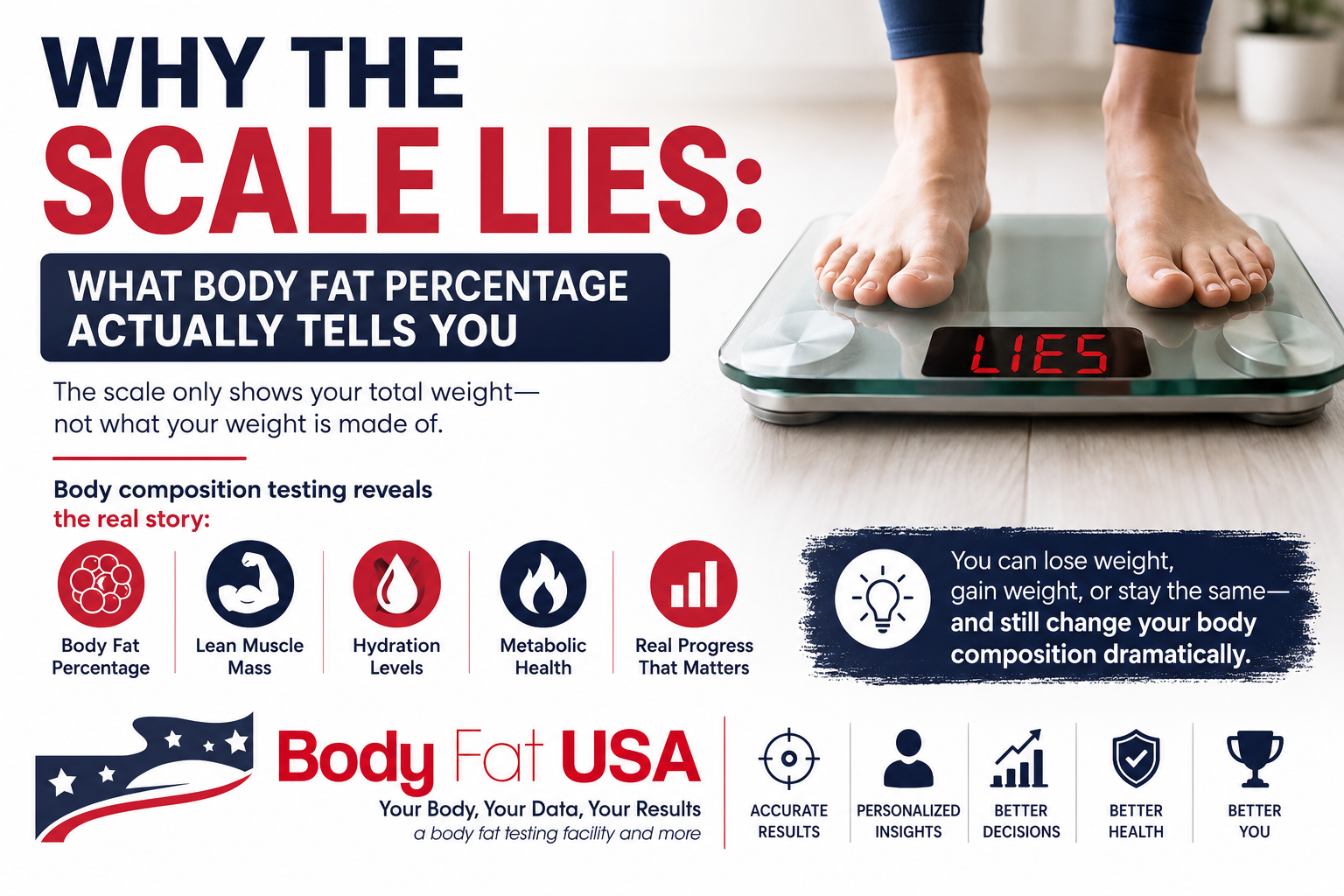
The scale only tells you how much you weigh — not what your weight is made of.
And that distinction matters far more than most people realize.
Weight Loss Does Not Always Mean Fat Loss
Your body weight is made up of several components, including:
- Body fat
- Muscle
- Water
- Bone
- Glycogen (stored carbohydrates)
- Organ tissue
The scale combines all of those into one number.
That means you can:
- lose weight without losing fat
- gain weight while getting healthier
- stay the same weight while dramatically improving your body composition
This is why relying only on the scale often creates frustration and confusion.
A Real-World Example
Imagine two people who both weigh 180 pounds.
Person A
- Higher muscle mass
- Lower body fat
- Better metabolic health
- Stronger and more athletic
Person B
- Lower muscle mass
- Higher body fat percentage
- More visceral fat
- Greater risk for metabolic disease
Same weight.
Completely different health profiles.
The scale cannot tell the difference.
Body composition testing can.
Why the Scale Fluctuates So Much
One of the biggest reasons people become discouraged is because body weight naturally changes day to day.
A scale increase does not automatically mean fat gain.
Weight can fluctuate because of:
- hydration changes
- sodium intake
- stress
- inflammation
- carbohydrate intake
- sleep quality
- hormonal shifts
- digestion
In some cases, you can gain 3–5 pounds overnight without gaining a single pound of body fat.
That’s why chasing daily scale changes often becomes emotionally exhausting and misleading.
The Bigger Problem: Losing Muscle Instead of Fat
This is where things become important from a long-term health perspective.
Many rapid weight-loss programs focus only on reducing total body weight. But when weight drops too quickly, the body often loses:
- muscle tissue
- water
- metabolic rate
—not just fat.
This matters because muscle plays a major role in:
- metabolism
- strength
- injury prevention
- insulin sensitivity
- healthy aging
- physical performance
Losing muscle while dieting can make it harder to maintain results long term.
The goal should never be:
“How much weight can I lose?”
The better question is:
“What exactly am I losing?”
What Body Fat Percentage Actually Tells You
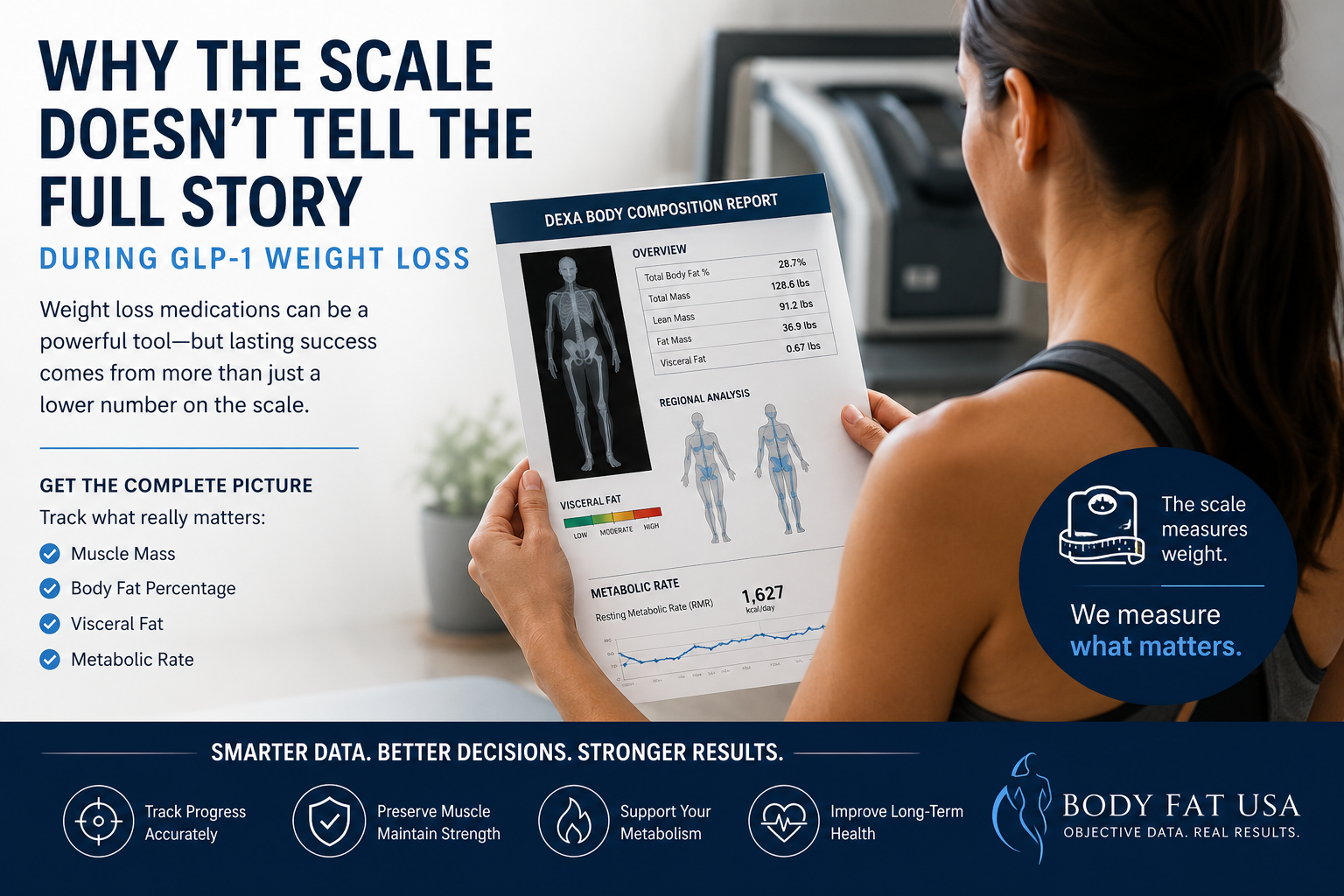
Body fat percentage helps answer that question.
It shows how much of your body is fat tissue compared to lean mass.
That gives you a much clearer picture of:
- health status
- fitness progress
- metabolic risk
- athletic readiness
- long-term sustainability
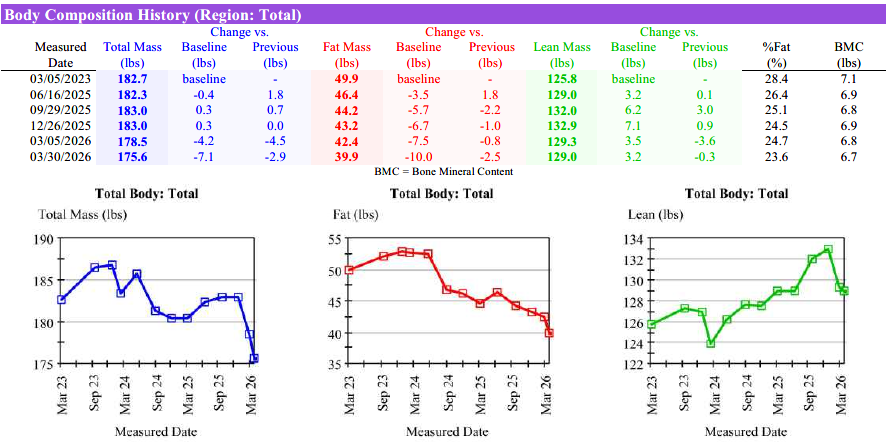
Instead of just tracking whether your weight changed, body composition testing helps determine:
- Did you lose fat?
- Did you preserve muscle?
- Are you improving your health?
- Is your program actually working?
That information is far more valuable than a single number on a scale.
Why BMI Often Misses the Mark
Many people also rely on BMI (Body Mass Index), but BMI has limitations because it only considers:
- height
- weight
It does not measure:
- muscle mass
- body fat percentage
- fat distribution
- metabolic health
That means:
- muscular individuals may be labeled “overweight”
- people with unhealthy body fat levels may appear “normal”
Body composition testing provides a more individualized and accurate assessment.
The Rise of “Skinny Fat”
One of the most overlooked health concerns today is something commonly called:
“Skinny Fat”
This describes people who:
- appear thin or average in clothing
- may have a “normal” BMI
- but carry higher levels of body fat and lower muscle mass
Many people are surprised to learn they may have elevated:
- visceral fat
- metabolic risk
- insulin resistance
—even if the scale says they are “fine.”
Again, the scale alone cannot reveal this.
Better Metrics Lead to Better Decisions
When you understand your body composition, you can make smarter decisions about:
- nutrition
- training
- recovery
- weight-loss strategies
- performance goals
Instead of guessing, you’re working with actual data.
That’s especially important for:
- athletes
- military personnel
- first responders
- GLP-1 medication users
- people pursuing long-term fat loss
- anyone focused on healthy aging
The Goal Isn’t Just Weight Loss — It’s Body Composition Improvement
At Body Fat USA, we believe the goal should be:
- preserving lean muscle
- reducing excess body fat
- improving overall health
- tracking meaningful progress
Because real progress is not just about becoming lighter.
It’s about becoming healthier, stronger, and more informed.
Final Thoughts
The scale is not useless.
But it’s incomplete.
If you only track body weight, you may miss the bigger picture entirely.
Understanding your body composition gives context to the number on the scale and helps you measure what truly matters.
Because better data leads to better decisions — and better results.
Ready to Learn What Your Numbers Actually Mean?
Body composition testing can help you:
- track fat loss accurately
- monitor lean muscle mass
- understand your metabolic health
- create more effective fitness and nutrition strategies
Schedule your assessment with Body Fat USA and start measuring progress beyond the scale.