How to Tell If You’re Losing Fat and Gaining Muscle
Body Recomposition: How to Tell If You’re Losing Fat and Gaining Muscle
Body Recomposition:
How to Tell If You’re Losing Fat and Gaining Muscle
You have been exercising consistently. Your clothes fit differently. You may look leaner, feel stronger, or notice more muscle definition.
But the number on the scale has barely moved. Does that mean your program is not working? Not necessarily.
You may be experiencing body recomposition, a change in the relative amounts of fat mass and lean mass in your body. If you lose fat while maintaining or gaining lean tissue, your appearance and body composition can change even when your total weight remains nearly the same.
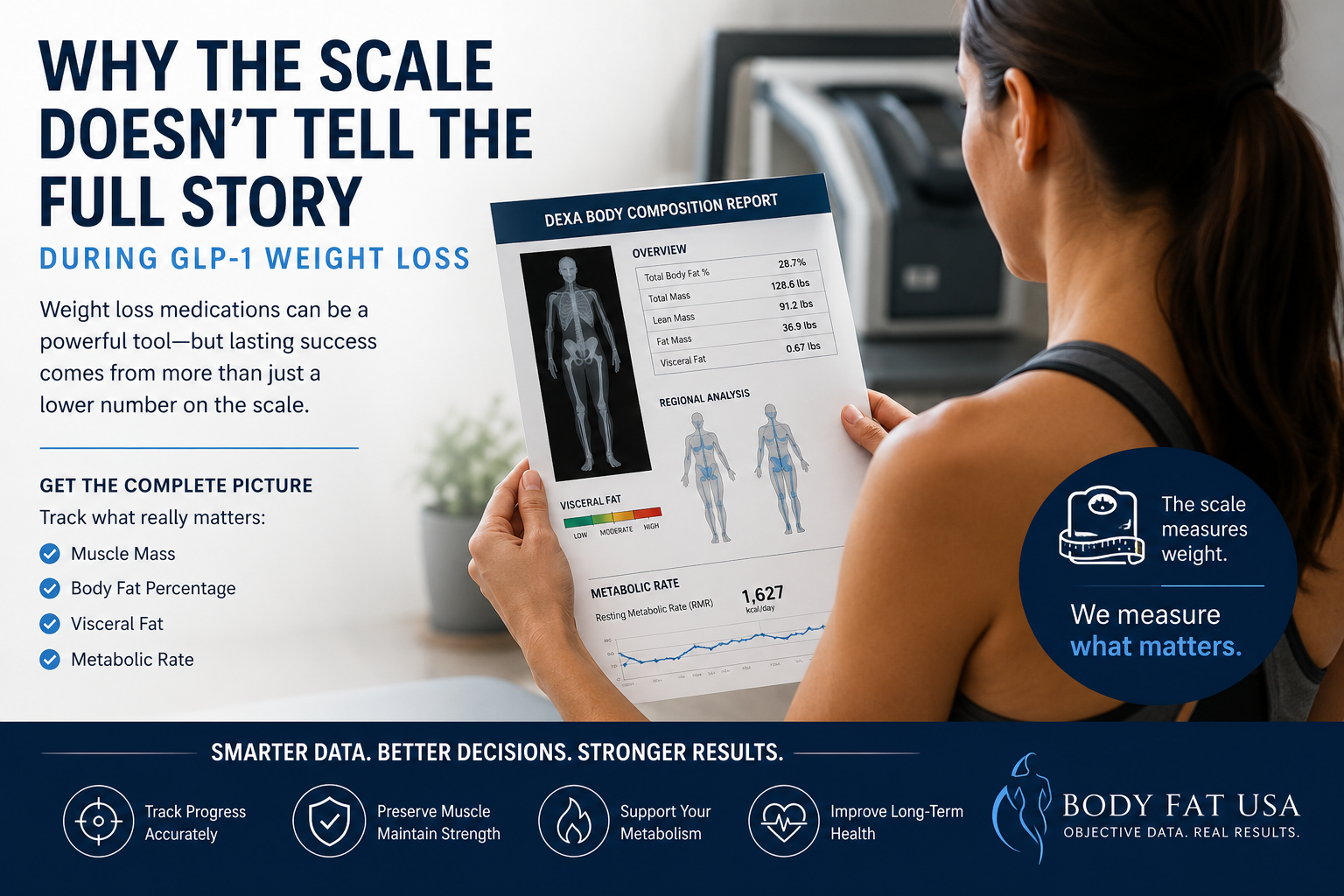
A bathroom scale cannot show that distinction. It only measures your total weight.
Body composition testing provides a more detailed way to determine whether you are losing fat, preserving lean tissue, or gaining lean mass over time.
What Does Body Recomposition Mean?
Body recomposition generally refers to reducing body fat while maintaining or increasing lean mass. In some cases, fat loss and lean-mass gain occur during the same period, resulting in little or no change in total body weight.
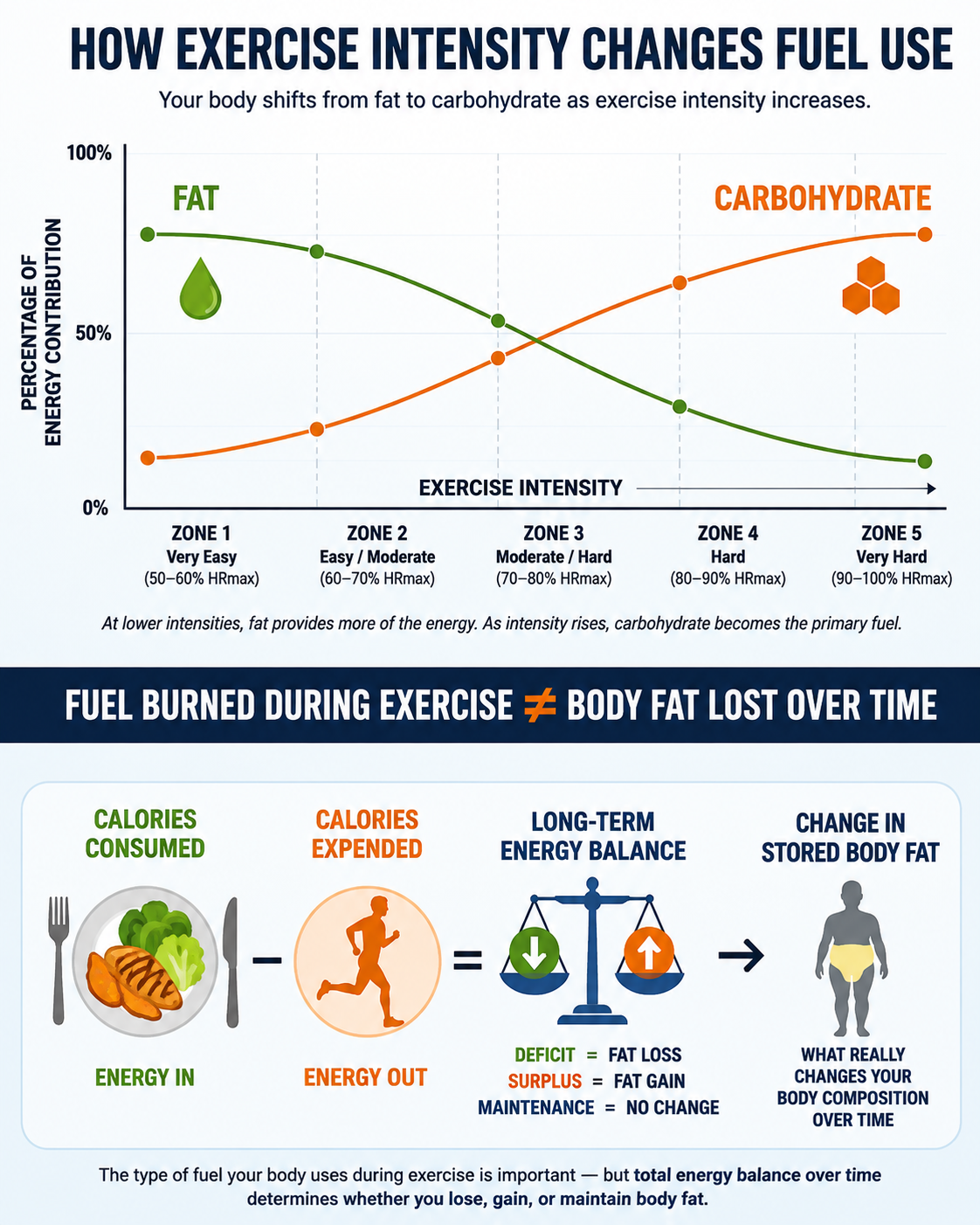
That is why body recomposition is different from weight loss.
Weight loss simply means that your total body weight has decreased. It does not explain what tissue was lost. The change could include:
- Fat mass
- Lean tissue
- Water
- Glycogen
- Gastrointestinal contents
- Bone mineral content, although this generally changes much more slowly
Body recomposition focuses on what your weight is made of, rather than only whether the number is going up or down.
Scientific literature commonly defines body recomposition as a reduction in fat mass while lean mass is maintained or increased, frequently without a meaningful change in total body mass.
Fat Mass Versus Lean Mass
To understand body recomposition, it helps to separate two commonly discussed DEXA measurements: fat mass and lean mass.
Fat mass
Fat mass is the total amount of fat tissue identified during the scan. It can be reported for the entire body and for individual regions, such as the arms, legs, and trunk.
Tracking fat mass in pounds or kilograms can sometimes be more informative than tracking body-fat percentage alone.
For example, body-fat percentage can decrease because:
- Fat mass decreased.
- Lean mass increased.
- Both occurred.
- Hydration or other short-term conditions affected the lean-mass estimate.
Looking at both fat mass and lean mass provides more context.
Lean mass
Lean mass refers to nonfat, nonbone soft tissue.
This includes much more than skeletal muscle. It also includes:
- Body water
- Organs
- Connective tissue
- Skin
- Other nonfat soft tissues
This distinction matters.
A DEXA scan can measure changes in lean tissue, but it cannot prove that every pound of increased lean mass represents newly built skeletal muscle. Hydration, glycogen storage, inflammation, and recent food or exercise can influence short-term lean-mass measurements.
DXA separates the body into bone mineral content, fat mass, and lean soft tissue. Lean soft tissue includes water, protein, and other nonfat components rather than muscle alone.
For that reason, it is more accurate to say that a DEXA scan measures lean mass or lean tissue, not that it directly isolates and weighs every skeletal muscle in the body.
Which DEXA Measurements Can Show Body Recomposition?
A DEXA body composition report provides several measurements that can be compared over time.
No single number tells the entire story. The most useful interpretation comes from examining several measurements together.
1. Total fat mass
Total fat mass shows the estimated weight of fat tissue throughout the body.
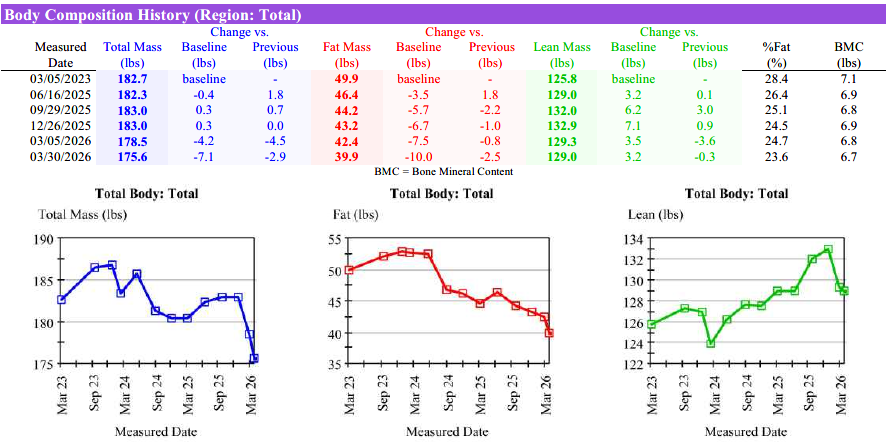
A decrease in total fat mass between properly standardized scans provides stronger evidence of fat loss than a decrease in body weight alone.
2. Total lean mass
Total lean mass shows the amount of nonfat, nonbone soft tissue in the body.
When fat mass decreases while lean mass remains relatively stable, the person may be losing fat while preserving lean tissue.
When fat mass decreases and lean mass increases, the results may be consistent with body recomposition. However, hydration and other testing conditions should also be considered.
3. Body-fat percentage
Body-fat percentage represents the proportion of total body mass attributed to fat.
For example, a person carrying 40 pounds of fat at a body weight of 160 pounds has a body-fat percentage of approximately 25%.
Body-fat percentage can improve through several different paths:
- Losing fat while maintaining lean mass
- Losing fat while gaining lean mass
- Maintaining fat mass while gaining lean mass
- A combination of changes
Because body-fat percentage is a ratio, it should be interpreted alongside the underlying fat-mass and lean-mass figures.
4. Regional fat and lean measurements
DEXA reports can divide the body into regions, including:
- Left arm
- Right arm
- Left leg
- Right leg
- Trunk
- Android region
- Gynoid region
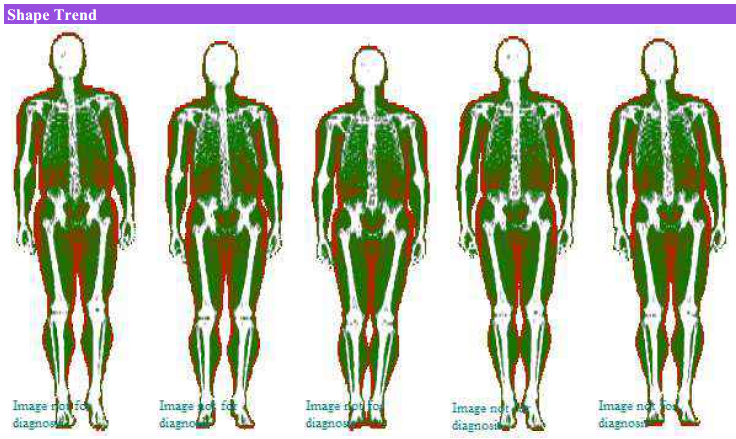
These regional measurements can help identify whether changes are occurring throughout the body or are concentrated in particular areas.
Regional lean-mass comparisons may also provide information about left-to-right symmetry. However, they should not be treated as direct measurements of individual muscles or as diagnoses of strength, mobility, or injury.
5. Appendicular lean mass
Appendicular lean mass generally refers to the lean tissue measured in the arms and legs.
Because the arms and legs contain a substantial amount of skeletal muscle, appendicular lean mass can be useful when tracking changes associated with resistance training or changes in physical condition.
However, it remains a lean-tissue measurement. It should not be interpreted as a direct measurement of pure skeletal muscle.
6. Total body weight
DEXA also reports total mass. This measurement is useful, but it becomes much more informative when viewed alongside fat mass, lean mass, and bone mineral content.
You can learn more about these report components in Understanding Your DEXA Report.
How to Track Body Recomposition
DEXA is one measurement tool, but it does not need to be used in isolation.
A practical body-recomposition tracking system may include:
Body weight trends
Instead of reacting to a single weigh-in, compare weekly averages over time. This reduces the influence of normal day-to-day fluctuations.
Circumference measurements
Waist, hip, thigh, arm, and chest measurements can provide additional context.
Measurements should be taken at consistent anatomical locations, using the same tape tension and similar conditions each time.
Progress photos
Photos may reveal changes in shape and proportion that are difficult to see from daily observation.
For more meaningful comparisons, use the same:
- Lighting
- Distance
- Camera angle
- Clothing
- Posture
- Time of day
Clothing fit
Changes in how clothing fits can provide useful, although subjective, evidence of changes in body shape.
Performance data
Strength, endurance, speed, and work capacity may provide information about physical performance.
However, improved performance does not directly prove that muscle mass increased. Skill development, neurological adaptation, technique, motivation, and conditioning can all affect performance.
Repeat DEXA scans
Repeat DEXA scans provide objective comparisons of total and regional fat mass, lean mass, body-fat percentage, and bone measurements.
The most useful approach is to look for agreement among several indicators rather than relying on one measurement.
Why Repeat-Scan Conditions Must Remain Consistent
Comparing two DEXA scans requires more than simply scheduling another appointment.
Lean-tissue measurements can be influenced by:
- Hydration
- Recent meals
- Carbohydrate and glycogen storage
- Recent exercise
- Inflammation
- Time of day
- Menstrual-cycle-related fluid changes
- Clothing and objects worn during the scan
- Positioning on the scanner
A change in lean mass between two scans may reflect actual tissue change, temporary fluid differences, measurement variability, or some combination of the three.
To improve comparison quality, try to repeat the same conditions before each scan:
- Use the same facility.
- Use the same scanner.
- Schedule at approximately the same time of day.
- Follow a similar eating routine.
- Maintain similar hydration.
- Avoid strenuous exercise beforehand.
- Use the restroom before testing.
- Wear similar lightweight, metal-free clothing.
- Avoid comparing a dehydrated scan with a normally hydrated scan.
DXA practice guidance emphasizes consistent acquisition, calibration, positioning, and cross-calibration when longitudinal results are compared. Differences between manufacturers or systems may complicate direct comparisons.
For detailed appointment instructions, see How to Prepare for a DEXA Body Composition Scan.
How Much Change Is Meaningful?
Every measurement method has some degree of variability.
Even when body composition has not meaningfully changed, two scans may not produce perfectly identical results. Small differences may result from positioning, hydration, food intake, normal biological variation, or technical measurement variability.
This means that a very small reported change should not automatically be interpreted as definite fat loss or muscle gain.
Instead, consider:
- The size of the change
- The amount of time between scans
- Whether preparation conditions were similar
- Whether several measurements moved in the same direction
- Whether circumference, photos, clothing fit, or other data support the same conclusion
A trend across several well-standardized measurements is generally more informative than a tiny difference between two isolated tests.
When Should You Repeat a DEXA Scan?
Body recomposition takes time. Testing too frequently can make normal fluctuations look more important than they are.
For active progress tracking, many Body Fat USA clients repeat their DEXA scan approximately every 8 to 12 weeks.
For general monitoring, a repeat scan every 3 to 6 months may be sufficient.
The ideal interval depends on:
- The goal being tracked
- The expected rate of change
- The consistency of the training or weight-management period
- Whether a meaningful intervention has occurred
- Whether a healthcare provider has recommended a particular schedule
Body Fat USA’s current guidance recommends approximately 8 to 12 weeks for active tracking and 3 to 6 months for general monitoring.
Scanning every week is unlikely to provide useful information about actual muscle gain or fat loss. The expected changes may be smaller than short-term biological and measurement variability.
Consistency matters more than frequency.
What a DEXA Scan Cannot Tell You
A DEXA scan can provide detailed body composition measurements, but it cannot explain everything that caused those measurements.
A scan cannot tell you:
- Which exercise program you should follow
- How many calories you should eat
- Which diet is best for you
- How much protein you personally require
- Whether a specific supplement is effective
- Whether you are performing an exercise correctly
- Whether a change in lean mass is entirely new skeletal muscle
- Whether you are healthy based on body composition alone
- Whether a medical condition is present
- Why a particular change occurred
DEXA results should also not be treated as a score of personal worth, effort, fitness, or discipline.
Body Fat USA is a testing facility. We provide objective body composition measurements and help clients understand what appears on their reports. We do not prescribe training programs, diets, supplements, or medical treatment.
For decisions about nutrition, exercise programming, or medical care, consult a qualified professional who can evaluate your individual needs.
The Best Way to Evaluate Body Recomposition
To determine whether body recomposition is occurring, compare more than body weight.
Look at:
- Total fat mass
- Total lean mass
- Body-fat percentage
- Regional fat and lean measurements
- Waist or other circumference measurements
- Progress photos and clothing fit
- Longer-term weight trends
- Testing conditions and possible sources of short-term variation
The strongest evidence of body recomposition is not simply that the scale stopped moving.
It is a consistent pattern showing that fat mass has decreased while lean mass has been maintained or increased.
A DEXA scan provides a detailed way to measure that pattern. It does not tell you what program to follow, but it can help determine whether your body is changing in the way you intended.
Measure More Than Body Weight
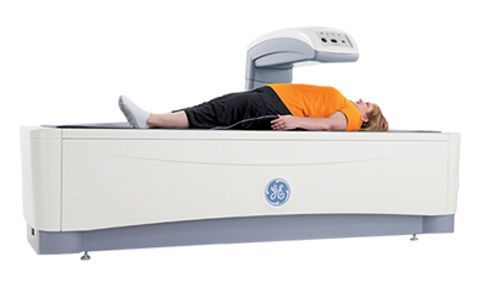
Body Fat USA provides DEXA body composition testing in Denver using a GE Lunar Prodigy scanner.
Your report includes total and regional measurements of:
- Fat mass
- Lean mass
- Body-fat percentage
- Left-to-right lean-tissue distribution
- Android and gynoid fat distribution
- Bone mineral content and density
Explore:
- DEXA Body Composition Testing in Denver
- Body Fat USA Pricing
- Frequently Asked Questions
- Schedule a DEXA Scan
Your scale can tell you whether your total weight changed. A body composition comparison can help show what changed.